
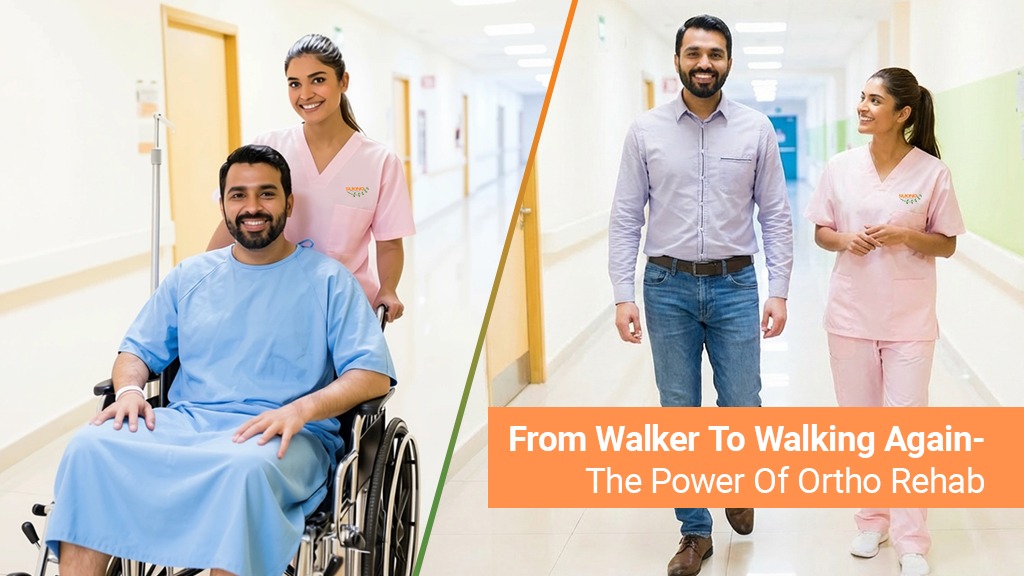
Most people will never forget that moment, the moment when they first require a walker. It is not just an equipment, but a reminder that something has actually changed. Injury, surgery, or progressive joint loss may deprive one of the simplest human functions: the ability to move freely without any fear.
However, what most people do not know at that time is that having a walker is not the endpoint of mobility but the starting point of regaining mobility. And the road back to walking confidently occurs through the science, structure, and compassion of orthopaedic rehabilitation.
Ortho rehab has been found to be extraordinary, whether one is recovering from a fracture, a joint replacement, or severe arthritis cases, where it helps people to stand tall and move ahead, metaphorically and literally.
This blog is an exploration of how the process of shifting from the walker to walking again occurs, and how the right rehabilitation makes all the difference.
Table of Contents
ToggleThe First Step: Accept help
The shift to a walker can be accompanied by various moods. Frustration, embarrassment, or even fear. Most of these individuals feel that they are no longer independent and particularly the old people who are afraid of being a burden. However, walkers are viewed differently by the orthopaedic specialists. To them, walkers are:
- A temporary safety tool.
- A way to prevent falls.
- An intermediate between frail muscles and complete functionality.
- An uplifter on the road to recovery.
The walker is not intended to enslave. It is supposed to take a person through the difficult period till their body can be ready to be independent again.
Where ortho rehab steps in
Orthopaedic rehabilitation is a planned intervention aimed at regaining strength, mobility, stability, and functionality following a surgery or injury. It integrates medical science, physical exercise, and manual practices in order to assist the body in healing safely and with success.
Each individual’s recovery process is different, and thus, rehab is tailored according to:
- Age.
- Type of injury or surgery.
- Pain level.
- Current mobility.
- Strength and balance.
- Lifestyle goals.
And the aim can be as basic as walking again.
The components of ortho rehab
The body is usually weak when one begins rehab. The muscles can have become weaker as a result of being inactive, joints can be stiff, and the movements that once came effortlessly now need effort and concentration. Ortho rehab addresses this step-by-step. This is how
1-Recovery of basic muscle strength.
The therapist deals with key muscle groups, including:
- Thigh muscles.
- Hip muscles.
- Calf muscles.
- Core muscles.
These are the basic muscles required for safe walking. The aim is to restore balance and alignment by making them stronger and avoiding re-injury.
2-Improving joint mobility
Joints feel stiff and limited after surgery, such as knee replacement, hip replacement, or ligament repair.
Ortho rehab uses the following therapies to loosen joints, stretch them, and render them functional.
- Passive stretches.
- An extensive range of motion exercises.
- Manual therapy.
- Heat therapy.
- Hydrotherapy.
3-Walking correctly
Most individuals are not aware of the fact that they have adopted unhealthy habits while walking to counter the pain.
Therapists analyse:
- Step length.
- Foot placement.
- Weight distribution.
- Rhythm and speed.
They then instruct the patients to walk with a natural, painless, and energy-efficient gait.
4-Balance
Poor balance is one of the greatest causes of people using walkers. The system of balance in the body, which includes muscles, nerves, and joints, takes time to reconnect after surgery or injury.
Ortho rehab makes patients:
- Reduce the fear of falling.
- Improve posture.
- Improve stabilizer muscles.
- Increase reaction time.
- Be able to walk without aids.
Balance boards, foam pads, and parallel bars are the tools that assist patients to have step-by-step control.
5- Pain management
Pain usually drives people to walkers. Ortho rehab offers focused pain reduction and management to achieve proper mobility.
Therapists use:
- Cold and heat therapy.
- Ultrasound.
- TENS therapy.
- Manual therapy.
- Guided stretching.
The suffering does not end at once, but rehab makes it bearable to be able to move forward.
The emotional strength to let go of the walker.
Walking never means only physical; it is emotional as well. Most of the patients are too scared to discontinue the use of the walker despite their readiness for the body. They are afraid to fall or put something to the strain, or to reverse their immobility.
Thanks to the support of a therapist who turns out to be the foundation of recovery.
- They literally walk next to the person until confidence sets in.
- They bring to mind the little wins.
- They make one believe in their own strength.
- They rejoice over every milestone.
For most individuals, the day they hand the walker back is very emotional. It symbolizes freedom, strength, hope, and independence, and most importantly, a second chance at normalcy.
Ortho rehab is not just exercises or equipment. It’s about restoring lives. It is about restoring confidence, movement, and dignity to people they were afraid to lose.

We are India’s first comprehensive continuum care provider. We provide multidisciplinary out of hospital care to acute and post-acute and chronically ill patients at our critical care facilities and your home.
- Sukino Healthcare
- Sukino Healthcare
- Sukino Healthcare
- Sukino Healthcare