
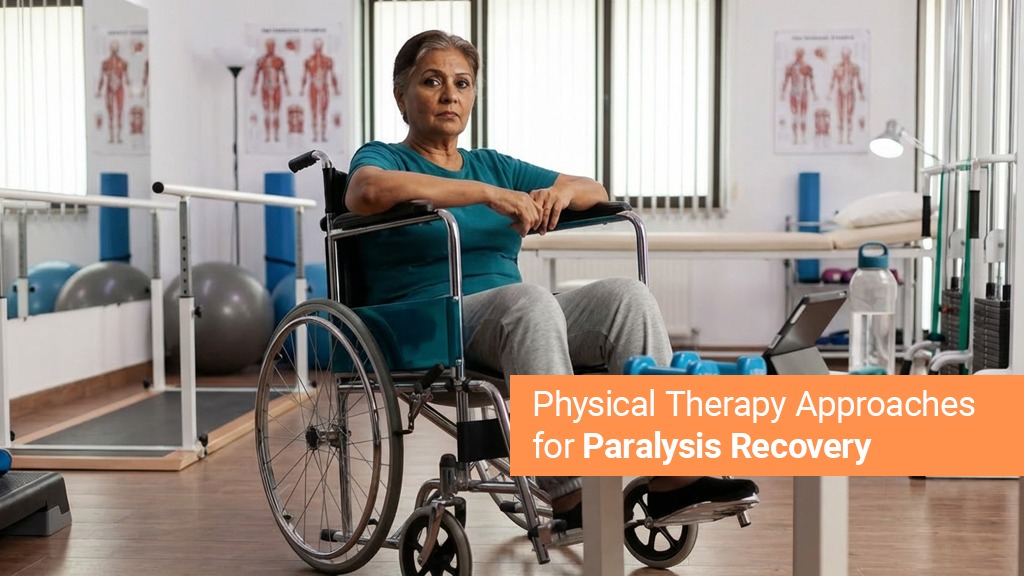
Life changes in an instant when paralysis comes in without any prior warning after a stroke, spinal cord injury, traumatic brain injury, or neurological illness. Activities that were considered normal may become hard or impossible to perform. This phase is usually marked by uncertainty, fear, and a burning question for patients and their families is whether they will ever regain movement.
Though recovery from paralysis might take a long time and may differ among different patients, physical therapy is always very significant in ensuring that the human body and brain learn how to move, regain strength, and restore normal operations. The process of healing is not fast, and a person can contribute greatly to it by acting in time and taking care of the issue.
Table of Contents
ToggleParalysis and the role of recovery
Paralysis is a condition that arises when the brain and the muscles fail to communicate. This may cause partial or total loss of movement, strength, or sensation. The pattern and severity would depend on the location and cause of injury.
Recovery is not a matter of resuming the way things used to be. Instead, the focus is on:
- Getting back as much action as possible.
- Preventing complications.
- Maximizing independence.
- Improving quality of life.
Physical therapy offers the framework, counsel, and consistency needed to make the voyage of optimum recovery as smooth as possible.
Why is physical therapy a necessity in the recovery from paralysis?
Physical exercise is not the only form of physical therapy. It is an all-inclusive, purpose-based approach that aids the healing of the brain and the body.
Key goals include:
- Regaining neural pathways.
- Keeping joints and muscles in good condition.
- Enhancing muscle balance and coordination.
- Training in safe movement.
- The prevention of secondary complications.
Fundamental physical therapy practices in overcoming paralysis
1-Movement training based on neuroplasticity
The brain is remarkable in terms of adapting, and this is called neuroplasticity. Repetitive and task-specific movements are utilized in physical therapy to activate the brain to develop new connections.
This approach includes:
- Repetitive functions.
- Task-oriented training.
- Guided voluntary movement.
2-Passive range of motion exercises and active assisted exercises
During the initial phases when the range of movement is restricted due to voluntary movement, the therapists perform passive range of motion exercises to keep the joints flexible to avoid stiffness.
Active-assisted movements are an encouragement to patients as they recover, and lead to muscle action and control increasing slowly.
These exercises:
- Prevent contractures.
- Improve circulation.
- Reduce pain and stiffness.
3-Strengthening and re-education of the muscle
Physical therapy focuses on:
- Training of the muscles available.
- Re-education of muscles to work properly.
- Improving endurance.
Specific strengthening assists in stabilization of the joints, bettering the posture and training of the patients to perform functions such as sitting, standing, or movement.
4-Balance training
Paralysis is associated with loss of trunk control and balance. Therapists work on:
- Core stability.
- Seated and erect posture.
- Weight-shifting exercises.
Better balance leads to a decrease in fall risk and confidence in movement.
5-Mobility rehabilitation and gait training
Gait training is an important part of the therapy for the partially paralyzed. This may involve:
- Parallel bars.
- Assistive devices.
- Treadmill-based training.
- Body-weight supported walking.
The training is focused on correct positioning, balance, and healthy movement patterns.
6-Functional Electrical Stimulation (FES)
Weakened muscles are stimulated by the use of electrical stimulation. FES helps:
- Improve muscle activation.
- Enhance circulation.
- Assist movement.
It can be used to speed up recovery when administered together with active therapy.
The prevention of secondary complications
The physical therapy also treats complications that may slow down recovery, such as:
- Pressure sores.
- Joint stiffness.
- Muscle spasticity.
- Poor circulation.
The most important preventive measures are positioning, stretching, and mobility training.
The significance of family involvement
Family members are significant in the recovery process. They should:
- Assist safely with movement.
- Encourage exercises at home.
- Encourage independence.
This form of cooperation prevents care continuation after therapy sessions.
Progress in the recovery process after paralysis can be incremental, and results can differ. Nevertheless, regular workouts will benefit people to the fullest extent possible, as they learn to move, be independent, and have confidence.
Through physical therapy directed by experts, the body is taught to adjust and get strong in a manner that promotes recovery and dignity.
In Sukino, paralysis rehabilitation is not only concerned with restoring movement; it is also concerned with restoring lives one step, one effort, and one victory at a time.

We are India’s first comprehensive continuum care provider. We provide multidisciplinary out of hospital care to acute and post-acute and chronically ill patients at our critical care facilities and your home.
- Sukino Healthcare
- Sukino Healthcare
- Sukino Healthcare