
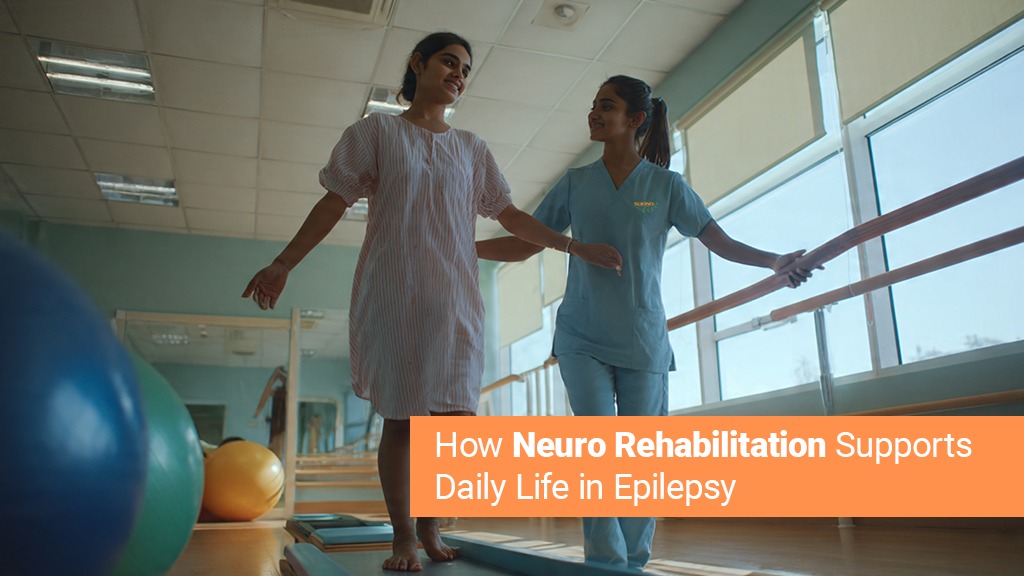
A seizure has an unkind mind of its own. It makes an unannounced appearance out of nowhere, and although it lasts only for a few seconds, it leaves an impact that can last a lifetime. It creates a residual fear in people about its return. Epilepsy not only affects the brain’s signals but also goes beyond and disrupts the confidence, cognitive abilities, emotional well-being, and basic identity of a person. Life becomes all about dreading the sudden fall in the bathroom, tremors in front of others, and disconcerting memory lapses.
Experts highly recommend a comprehensive treatment plan for epilepsy patients that combines medication with rehabilitation. This combination, they say, empowers people to lead an independent and confident life once again.
Table of Contents
ToggleThe challenges of epileptic life.
Epilepsy causes life to be very unpredictable. Whereas there are individuals who experience occasional seizures, there are those who experience frequent seizures, and the impacts might be persistent.
The challenges that are experienced in the day-to-day include:
- Short-term memory problems.
- Inability to focus at work or in school.
- Fatigue and low stamina.
- Fear.
- Drowsiness or lack of coordination.
- Irritability or depression.
These difficulties may gradually restrain autonomy. A person might quit driving, socializing, not cook alone, or drop out of work. Not that they are incapable of doing these things–but because they no longer feel safe in doing them. These latent layers of epilepsy are dealt with in neuro rehabilitation.
Neuro-rehabilitation in epilepsy
Neuro rehabilitation refers to a multidisciplinary therapy that is structured with the aim of enhancing neurological and day-to-day functioning. It is concerned with the way the body and the brain converse with each other and takes a highly personalized approach, as no two patients may be experiencing the same issues.
Neuro rehabilitation of epileptic patients may take the form of:
- Psychological treatment to boost memory, focus, and problem analysis.
- Balance and coordination training.
- Daily activity occupational therapy.
- Fear, mood, and psychological assistance.
- Safety and self-management education.
Benefits of neurorehabilitation in epilepsy
1-Enhances the cognitive ability.
A lot of epileptic patients complain of brain fog or forgetfulness. This can be directly due to seizures, due to medication side-effect or due to an irreversible change in the nervous system.
Cognitive rehabilitation helps the brain to be retrained via exercises. These could consist of memory, attention, and problem-solving exercises with the aim of gradual improvement in mental ability. However, more importantly, therapy is also educative of effective strategies. For example:
- Having organised planners or reminders.
- Division of tasks into small steps.
- Learning methods of working or studying to improve focus.
- Deploying practices that help decrease mental load.
These plans minimize frustration and rebuild belief in thinking skills.
2-Develops better balance.
Some forms of seizures, particularly the seizures of motor parts of the brain, may affect coordination and balance. Certain anti-epileptic drugs can also result in dizziness or delayed reflex reaction.
Neuro physiotherapy is concerned with:
- Enhancing postural stability.
- Enhancing coordination.
- Strengthening core muscles.
- Facilitate safe movement patterns.
A little bit goes a long way. The fact that a person can walk without feeling scared, even in busy places or use stairs, is a way of regaining freedom.
3- Helps overcome fear.
Fear is one of the most disabling factors of epilepsy. The randomness of the seizures may generate background anxiety. Falls, loneliness, and social embarrassment are the main concerns of many people.
This fear can be minimized through rehabilitation in two ways.
First, it creates physical and cognitive strength, and the body is now more equipped to recuperate fast in case there is a seizure.
Second, it offers education. The knowledge of seizure triggers, early warning signs, and safety protocols makes people confident and stronger. The feeling of helplessness reduces when individuals understand what they should do and what their relatives or colleagues can do. Once the uncertainty is manageable, confidence is boosted.
4- Contributes to emotional well-being.
Epilepsy is directly associated with increased anxiety and depression. This is no mere emotional weakness but a complicated interplay of the relationship between neurological alterations and life adaptation.
Psychological support is incorporated in neuro rehabilitation. The therapeutic sessions are based on:
- Anxiety coping mechanisms.
- Controlling stress.
- Building self-esteem
- Tackling social withdrawal.
The emotional health is likely to be enhanced, and so is the seizure management. Effective reduction of stress is relevant in the stabilization of the general neurological functioning.
5-Increasing self-sufficiency in activities of daily living.
Another important aspect of neuro rehabilitation is occupational therapy. It concentrates on real-life living, such as cooking, bathing, dressing, working, or managing money.
Therapists suggest minor physical changes to enhance safety. For example:
- Putting non-slip mats in the bathrooms.
- Not using sharp objects when doing unsupervised cooking.
- Organizing work schedules to avoid exhaustion.
These are not limitations; they are modifications that facilitate independence as opposed to restricting it.
6-Offering support to epileptic children and adolescents.
Epilepsy can disrupt education, interpersonal development, and self-esteem in children and adolescents. The parental and teacher guidance is often utilized in the neuro rehabilitation of younger individuals, along with the academic support strategies and cognitive training. Assistance in teaching a child to adopt coping strategies at an early age averts problems with school performance in later stages and subsequent emotional trauma. It is also a reassuring factor to the family that epilepsy does not determine the potential of a child.

We are India’s first comprehensive continuum care provider. We provide multidisciplinary out of hospital care to acute and post-acute and chronically ill patients at our critical care facilities and your home.
- Sukino Healthcare
- Sukino Healthcare
- Sukino Healthcare