
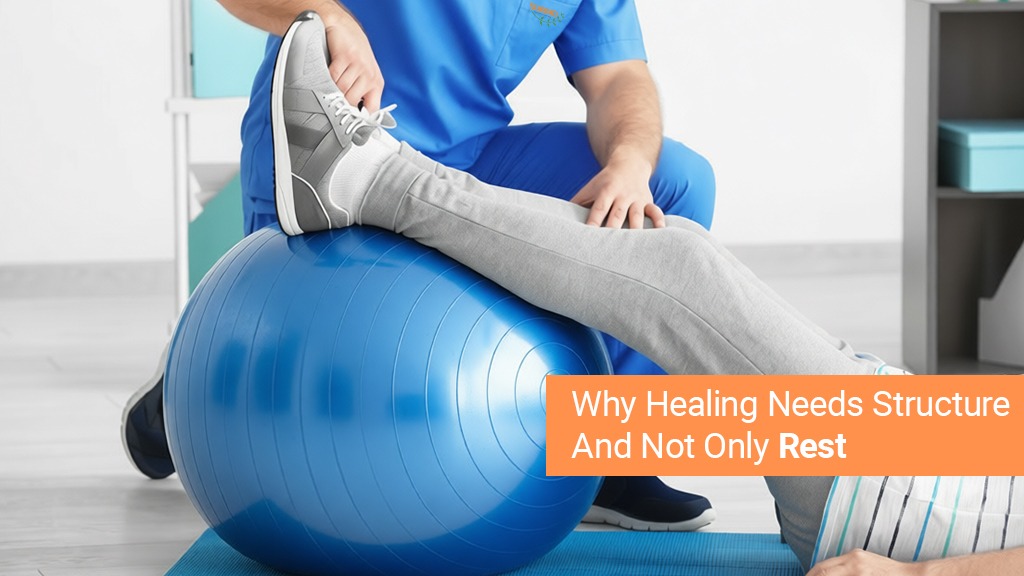
“Just take rest.”
It is the piece of advice that most of us get when we are hurt, sick, or are being operated upon, and it is the advice that most of us are quite happy to accept. Rest feels safe and like healing.
But days turn into weeks. The pain eases, then lingers. Rigidity and stiffness set in. Muscles weaken. Confidence drops. And soon, rest instead of a solution becomes a mute defeat.
The fact is that healing is not only about resting. It requires effective, gradual treatment, which not only restores the body but will make it recover completely.
Table of Contents
ToggleWhy does rest feel right, and what happens due to prolonged rest
During the initial step of recovery, rest is significant. The body requires time to overcome inflammation, pain, and injury after a traumatic event or illness.
But rest without proper treatment leads to the following issues:
- Weak muscles.
- Stiff joints.
- Faulty balance and coordination.
- Fear or movement.
- Poor circulation
- Increased fatigue.
- Sluggishness in resuming daily activities.
The body becomes accustomed to inactivity as fast as it becomes accustomed to activity. Prolonged rest may slow down healing. Sedentary patients may become more fall-prone and dependent, especially in old age.
Healing as an active process
Movement, circulation, and regulated stress are what the body needs to heal. When properly healed, the bones get stronger, muscles regenerate, and the nervous system relearns coordination and relaxation.
Without guided activity, healing is never complete.
That is why systematic rehabilitation is necessary, as it introduces an adequate amount of movement at the right time.
What does structure in healing entail?
Complete recovery does not imply forcefully going through pain or hastiness in healing. It implies a personalised and clear strategy that progresses as the body cures. Prevention is one of the greatest advantages of curative healing.
A guided, structured recovery plan:
- Reduces the risk of re-injury.
- Enhances joint health in the long term.
- Promotes healthy physical activity.
- Patients learn to move safely instead of going back to activity too soon.
Structure includes:
- Proper development of movement through rest.
- Specific exercises as opposed to unstructured movement.
- Professional direction and observation.
- Clear goals and milestones.
This makes recovery safe, effective, and sustainable.
Rehabilitation for structured healing
1-Physiotherapy
Physiotherapy involves the addition of controlled movement to:
- Improve flexibility.
- Restore muscle strength.
- Reduce stiffness and pain.
- Enhance coordination and balance.
As the healing process goes on, exercises are modified to avoid any kind of strain or, for that matter, any slack.
2-Occupational therapy
The process of healing is not complete until the normal things of life are manageable.
Occupational therapy is concerned with:
- Safe methods of moving, sitting, lifting, and reaching.
- Energy conservation.
- Carrying out everyday activities.
This is practical advice and practice that helps to prevent re-injury and create confidence.
Reasons as to why waiting out usually backfires
Most individuals put off rehabilitation with the hope that the body will self-heal. Minor injuries may heal, but movement problems may usually linger without a solution.
This leads to:
- Recurring pain
- Compensation movement patterns.
- Increased strain on other joints.
- Chronic discomfort.
Formal rehabilitation determines and rectifies these patterns at an early stage.
Healing means curing the mind and the body
Healing isn’t just physical. Damage and sickness are always accompanied by fear, frustration, and doubt.
Structured care provides the necessary emotional support through advice, belief in slow improvement, encouragement in times of failure, empowerment, and knowledge to reduce anxiety.
Healing is different for everybody. There exists no universal time frame for recovery. Age, health status, and the type of injury have an effect on the healing process. Be it after surgery, a fall, a stroke, or chronic pain, structure makes sure that healing is geared towards individual needs and objectives.
It changes recovery from not waiting to feel better to facilitating better movement, better strength, and independence. This change usually determines the distinction between a partial recovery and a real healing process. Rest is a good start–but it is not the journey that healing requires. The body is most healed when rest is accompanied by purpose and a plan.

We are India’s first comprehensive continuum care provider. We provide multidisciplinary out of hospital care to acute and post-acute and chronically ill patients at our critical care facilities and your home.
- Sukino Healthcare
- Sukino Healthcare
- Sukino Healthcare