
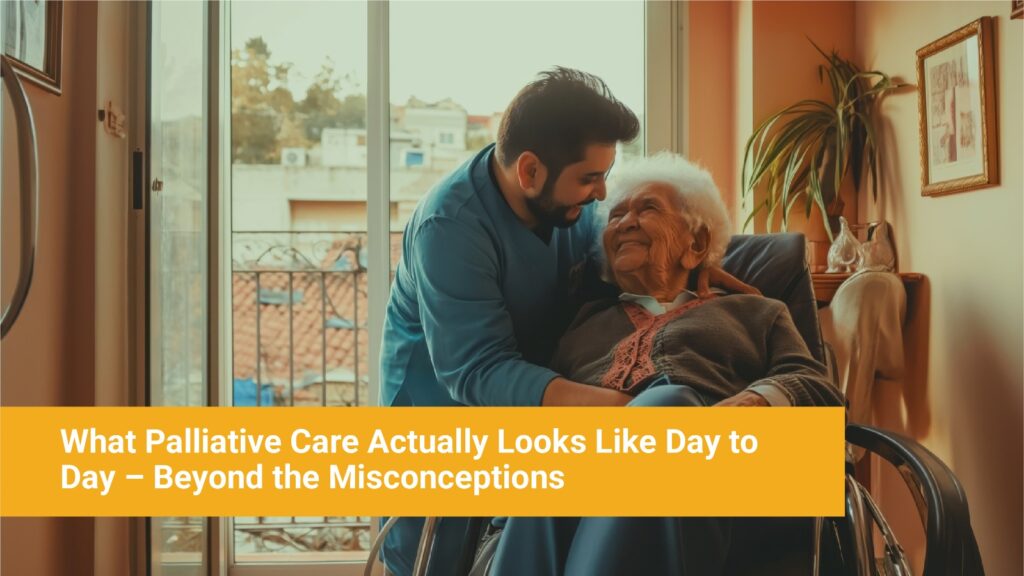
When the words “palliative care” come up, something shifts in the room. Families grow quiet, anxious, or visibly distressed. The assumption, almost universally, is that treatment is ending and hope is being withdrawn. It is one of the most common and consequential misunderstandings in serious illness care.
Palliative care is not the withdrawal of treatment. It is a specialised medical approach focused on relieving pain, managing symptoms and supporting patients and families through serious illness. It frequently runs alongside curative treatment. It is not a last resort. It is a layer of care focused on comfort, dignity, and quality of life.
The cost of this misunderstanding is real. When families delay or decline palliative care (based on what they believe it means), patients carry pain and distress that could have been addressed far earlier. Understanding what palliative care actually involves & when it helps is the first step toward ensuring patients receive the full scope of care they deserve.
Table of Contents
TogglePalliative Care Is Not What Most People Think It Is
Palliative care is not about giving up, stopping treatment or only caring for patients at the end of life. It is a specialised medical approach focused on relieving pain, managing symptoms and improving quality of life for people living with serious illnesses. Misunderstanding palliative care often delays support that could significantly benefit both patients and families. The table below sets the record straight:
The Misconception | What Is Actually True |
Palliative care means giving up on treatment | It runs alongside curative treatment – patients receive both simultaneously |
It is only for the last days of life | It can begin at any stage of a serious illness, often months or years before the end of life |
It is the same as hospice care | Hospice is one type of end-of-life care; palliative care is broader and not limited to dying |
Calling palliative means the doctor has no hope | It is a clinical decision about comfort and quality of life, not a signal of prognosis |
The family loses control once palliative care starts | Family involvement is central – goals of care are set together, not decided for them |
So What Is Palliative Care, Exactly?
It is specialised medical care focused on providing relief from the symptoms, pain, and stress of serious illness – whatever that illness is, whatever stage it is at. The goal is not to cure. It is to make the experience of illness as liveable as possible: less pain, better sleep, clearer thinking, the ability to eat, to recognise family members, to have a conversation that matters.
That sounds simple. In practice it requires a team with considerable skill – and a willingness to treat the whole person, not just the diagnosis on the chart.
What a Day of Palliative Care Actually Looks Like
This is where the misconceptions hit hardest. Most of us imagine palliative care as passive (a drip, a quiet room, minimal treatment). But in reality a palliative care setting is quite different. Lets see what our palliative rehabilitation in Bangalore, Kochi and Coimbatore centres include:
- Pain and symptom review – what changed overnight, what needs adjusting
- Medication management – ensuring comfort without over sedation
- Physiotherapy – gentle mobility work, preventing bed sores and preserving function
- Nutritional support – adapted eating plans when swallowing or appetite is affected
- Emotional and psychological check-in – with the patient and separately with the family
- Practical conversations – discharge planning, home modifications and what happens next
- Spiritual or cultural care – where the patient or family needs it.
Palliative Care That Puts Your Family First
At Sukino’s centre, palliative care is not a ward at the end of the corridor. It is a philosophy that runs through everything – pain management, dignity in daily care, honest conversations, and real support for the families carrying this alongside their loved ones.
If you are searching palliative care rehabilitation in Bangalore call us or visit sukino.com – because a good day is still possible, and we know how to help create one.
When to Ask for Palliative Care - and Who It Is For
Not only for cancer. Not only for the final weeks. Palliative care is appropriate for any serious condition that is causing significant suffering including advanced cardiac or lung disease, neurological conditions like Parkinson’s or motor neurone disease, stroke, kidney failure, and many others. It can begin months or years before the end of life, running alongside active treatment the entire time.
The question families should ask – and rarely do, early enough – is not ‘has it come to that?’ It is simpler: is my loved one in pain or distress that is not being fully addressed? If the answer is yes, palliative care belongs in the conversation now.
What Palliative Rehabilitation in India Does for Families
The patient is the centre. But the family is not at the edge in palliative care. Watching someone you love suffer is its own kind of suffering and it does not resolve the moment the patient is more comfortable.
Palliative care includes the family actively: honest conversations about what is happening & what to expect, support for caregivers taking care of patients’ needs at home, space to ask questions without feeling rushed and access to counselling when the weight of it becomes too heavy to carry alone.
FAQs
Earlier than most people think. Palliative care is appropriate from the point of any serious, life-affecting diagnosis like cancer, heart failure, advanced neurological conditions or chronic organ disease. It does not require a terminal prognosis. If a condition is causing significant pain, functional loss, or distress, that is the moment to ask.
No. This is the most persistent misconception and it causes real harm – families sometimes refuse palliative referrals because they fear it means abandoning curative treatment. Palliative care runs alongside whatever else is happening: chemotherapy, cardiac medication, dialysis. Its job is to manage what those treatments cannot – pain, fatigue, emotional distress, and loss of function.
A properly resourced palliative team includes physicians trained in pain and symptom management, nurses who understand complex care needs, physiotherapists, occupational therapists, a social worker or counsellor, a dietitian, and – crucially – someone who can support the family, not just the patient. At its best, it is a coordinated team, not a rotating series of separate appointments.
It is far more nuanced than most families expect. Palliative pain management starts with a proper assessment – what kind of pain, where, how it changes with movement or time, what makes it worse. Medication is adjusted continuously, not set once and left. The goal is not sedation; it is comfort with as much alertness and function as the person wants.
Actively and deliberately. Families carry enormous weight – guilt, grief, practical decisions they feel unqualified to make and the exhaustion of caring for someone who is suffering. Palliative care includes regular family meetings, honest conversations about what to expect, practical support for caregivers at home and access to counselling. The patient is the centre but the family is not left at the edge.
Absolutely. Advanced heart failure, COPD, kidney disease, Parkinson’s, motor neurone disease, stroke, and dementia all warrant palliative care approaches. In India, palliative care is still most commonly associated with oncology – but that is changing, and it should be. Suffering is not diagnosis-specific.
Palliative care at Sukino is not a separate service added on at the end. It is woven into the way care is delivered – from daily symptom reviews and pain management to family counselling and honest conversations about what lies ahead. Our teams treat the person in front of them, not just the condition on the chart.

We are India’s first comprehensive continuum care provider. We provide multidisciplinary out of hospital care to acute and post-acute and chronically ill patients at our critical care facilities and your home.
- Sukino Healthcare
- Sukino Healthcare