
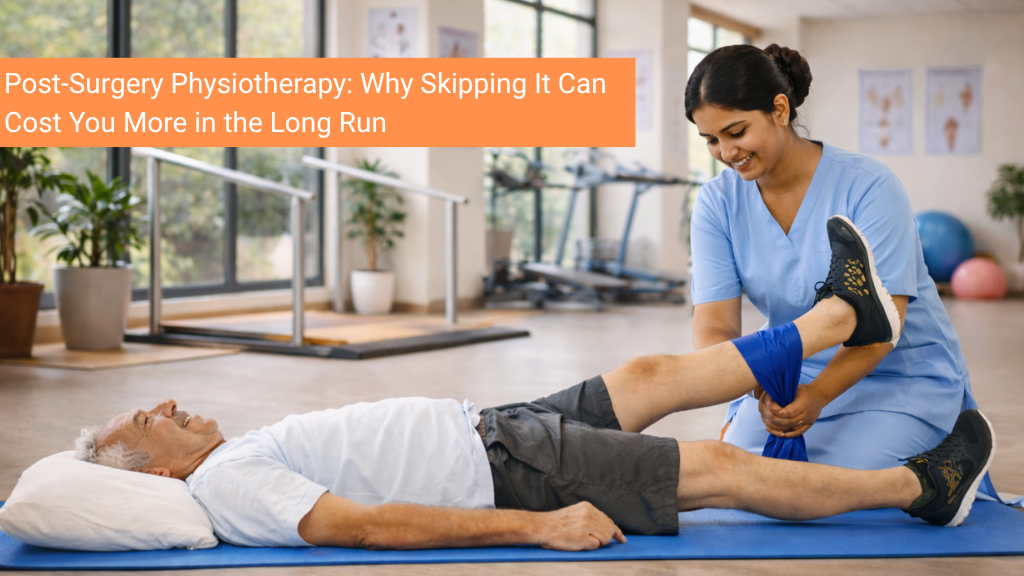
It seems like a finish line when it comes to surgery.
Whether it is knee replacement, spine surgery, ligament surgery, or fracture surgery, patients and families are convinced that once a surgery is done, then rest and medication will see them through.
But the point is that surgery is only one of the elements of healing.
The true measure of how well you will heal is what follows the surgery, the speed with which you will be on your feet, and whether or not you will be able to live again with the type of life you had before. And it is at this point that the majority commit the costly mistake. They do not do or delay physiotherapy.
Table of Contents
ToggleThe benefits of surgery alone
Surgery is usually the remedy for the primary issue. It corrects, subsidizes, or fixes the impacted region. But it does not necessarily make it stronger, more flexible, or mobile.
Following surgery, the following effects may be experienced:
- Muscle weakness.
- Joint stiffness.
- Reduced mobility.
- Pain with movement.
- Loss of confidence in using the affected limb.
The price of skipping physiotherapy
Most patients do not attend physiotherapy because they believe that they can do it alone, or that a rest is sufficient. This could be convenient in the short run. However, the effects start to manifest with time.
1-Long-lasting pain and stiffness.
Unless they are exercised regularly and guided in exercises, joints can become stiff and painful. Therefore, what would have been improved in weeks could only be done in months.
2-Limited range of motion
One should not avoid free movement after surgery, such as knee or shoulder surgery. The condition of not going through physiotherapy can also lead to restriction of movements, which makes the normal activities difficult.
3-Muscle weakness
The muscles that are around the area of operation will become weak quickly after surgery. Without the strengthening exercises, the patient may find it hard to walk, lift, or even stand for a long time.
4-Risk of re-Injury
Poor movement patterns and weak muscles are a risk of falls or re-injury. This leads to patients needing further medical treatment.
5-Delayed recovery
The longer the delay in the rehabilitation period, the more time it takes to resume work, day-to-day activities, and independence.
Physiotherapy: The bridge between surgery and recovery
You need to consider physiotherapy as the medium that will help to bridge the gap between successful surgery and complete recovery.
A physiotherapy program can assist patients:
- Reduce pain safely.
- Enhance muscle flexibility and range.
- Rebuild muscle strength.
- Bring back the balance and coordination.
- Gain self-confidence in movement.
The type of session is determined by the surgery, condition, and stage of recovery of the patient. These are slow, yet steady, improvements.
It is not only exercise but planned, supervised, and directed recovery.
The benefit of early intervention
Time can be instrumental in proper recovery after surgery.
Early physiotherapy (as recommended by your doctor) can help avoid complications such as stiffness, swelling, and muscle loss. Early mobility also enhances the circulation that aids the healing.
Postponed treatment complicates the process because the body becomes used to being still, and rigidity ensues. The earlier the rehabilitation, the easier the recovery process is going to be.
Post-surgery physiotherapy in Sarjapura and why it counts
As the population has increased and people are leading a hectic life in places such as Sarjapura, the access to good rehabilitation services has never been taken as seriously as it is now. Most patients are confronted with one major challenge after the surgery, and that is- where to seek good physiotherapy.
The presence of a rehabilitation centre within Sarjapura that is specialised makes a huge difference. It makes sure that the patients do not avoid or postpone treatment because of distance, inconvenience, or ignorance.
Organized physiotherapy in the post-surgery period near home enables the patients to:
- Always attend classes.
- Receive expert guidance.
- Heal in a conducive and well-furnished setting.
- Prevent complications of late treatments.
The availability of rehabilitation makes the recovery easier to manage and more successful, as well.
An operation can correct the situation–but it is physiotherapy that makes the patient well.
Recovery after surgery is not simply a matter of physical activity. It also entails restoring confidence. The use of post-surgery physiotherapy is not an add-on. It is an imperative component of the treatment process.
Omitting it can be considered a minor step at the time, but it can cause long-term restrictions, pain, and other medical issues.
Conversely, the rehabilitation commitment can be useful in making sure that the benefits of surgery are maximised.

We are India’s first comprehensive continuum care provider. We provide multidisciplinary out of hospital care to acute and post-acute and chronically ill patients at our critical care facilities and your home.
- Sukino Healthcare
- Sukino Healthcare