
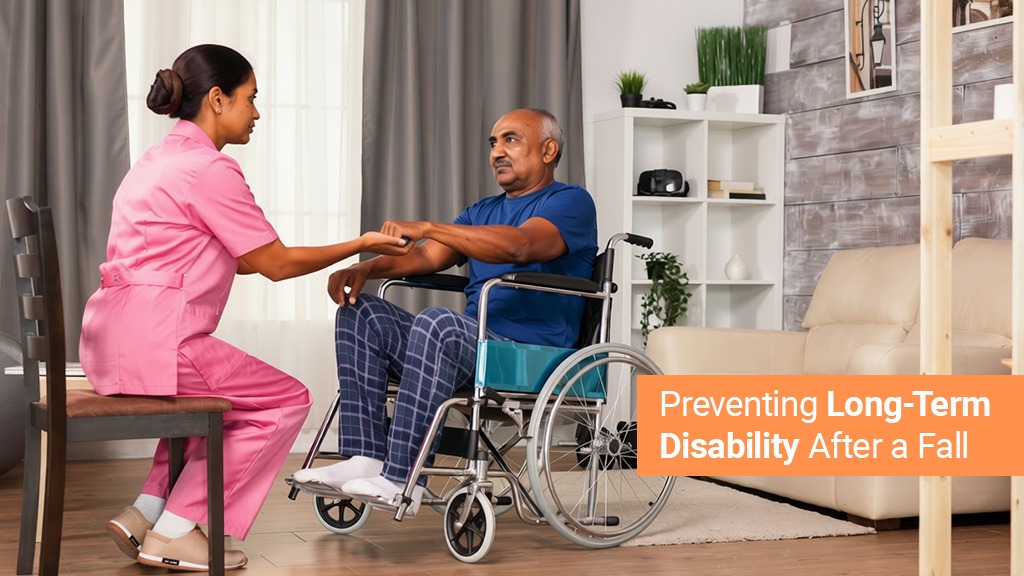
A fall can happen in seconds. A slippery floor, misplaced foot, and an instance of vertigo–and suddenly life is different. To most individuals, particularly the elderly, a fall does not merely constitute an accident. It may be the start of something unpleasant, such as the lack of independence.
However, it is not the fall, but what comes after it that is a problem.
Long-term disability following a fall is a major concern, but it can be prevented with effective rehabilitation, timely medical attention, and appropriate support. The realization of the risks and early response may be the only difference between a life of long-term restrictions and a sure reintegration into normal life.
Table of Contents
ToggleWhy are falls a serious concern?
Some of the most prevalent injuries occur in all age groups as a result of falls, and they severely affect:
- Patients with osteoporosis or problems with their joints.
- Patients with neuro or balance issues.
- Those who have been subjected to surgery or illness.
These injuries can be fractures, head or ligament injuries, or a simple tear in the muscles. They may be minor, but the pain itself, or the fear of the possibility of getting hurt again, may be lurking in the back of the mind, and the disability may be permanent.
The injuries may result in:
- Ability to move permanently.
- Dependence on others.
- Loss of quality of life.
The hidden consequences of a fall
The consequences of a fall are not necessarily obvious and direct.
Many people experience:
- Lack of movement because of pain or fear.
- Weakness of the muscles due to immobility.
- Poor balance and coordination.
- Emotional anguish, anxiety, or depression.
It is a loop. Inactivity may further deteriorate mobility and independence. This is why intervention at an early age is very important.
Why early care matters
The intervention during the initial days of a fall makes significant contributions to recovery.
The steps involved should be:
- Physical examination to eliminate the possibility of fractures or internal trauma.
- Safe movement through pain management.
- Early mobility guidance.
The failure to pay enough attention to pain or to provide medical care in time can lead to negative outcomes, such as stiff joints, muscle atrophy, or other issues. Timely rehabilitation can be very productive, and even in extreme cases, the outcomes are good.
Rehabilitating: The key to recovery
Rehab is not only applicable to major injuries. It is also imperative, even after seemingly minor falls. Even people aged 70s and 80s can become mobile, strong, and independent due to regular therapy and care.
What does rehab include?
1-Strength and mobility physiotherapy
Physiotherapists help:
- Restore movement.
- Make weak muscles stronger.
- Enhance coordination and balance.
- Reduce pain and stiffness.
Specific exercises help patients recover their functionality without any additional harm.
2-Daiy occupational therapy
Occupational therapists work on functional recovery, which is getting patients back to normal functioning, such as:
- Walking safely.
- Dressing and bathing.
- Cooking and household tasks.
- They also evaluate the homes to prescribe safety changes to avert future falls.
3-Getting over the fear of falling again
Following a fall, a lot of people restrict their movements, not because they lack the ability to move, but because they fear doing so.
This fear leads to:
- Reduced activity.
- Muscle weakness.
- Increased fall risk.
Rehabilitation assists in restoring confidence over time, which reassures patients that they can move safely.
4-Remedying background risk factors
The long-term disability is something that can be prevented, but not the fall itself.
Rehabilitation teams identify the causes that lead to falls. They identify:
- Balance and gait issues.
- Vision and footwear issues.
- Medication side effects
- Muscle strength and bone performance.
By treating these factors, they minimize the risk of recurrence of falls and chronic complications.
Caregivers and family roles
Family support is very important in preventing disability following a fall.
They can help by:
- Encouraging exercises as recommended by therapists.
- Creating a safe environment at home.
- Observing any pain, confusion, or fear.
- Helping to feel better.
Preventing falls
Planning for the future is also a part of recovery, and the prevention of falls is important to ensure long-term independence.
Fall prevention interventions comprise:
- Balance training, Strength training.
- Home safety modifications.
- Assistive devices on demand.
- Frequent eye and medical examinations.
Long-term disability in case of a fall may be avoided with timely rehabilitation, loving care, and a proactive approach.
At Sukino, the work of recovering from a fall is done patiently, skilfully, and respectfully, keeping in mind the individual requirements of the person and guiding them on their way to walking confidently in the world again with dignity.

We are India’s first comprehensive continuum care provider. We provide multidisciplinary out of hospital care to acute and post-acute and chronically ill patients at our critical care facilities and your home.
- Sukino Healthcare
- Sukino Healthcare