
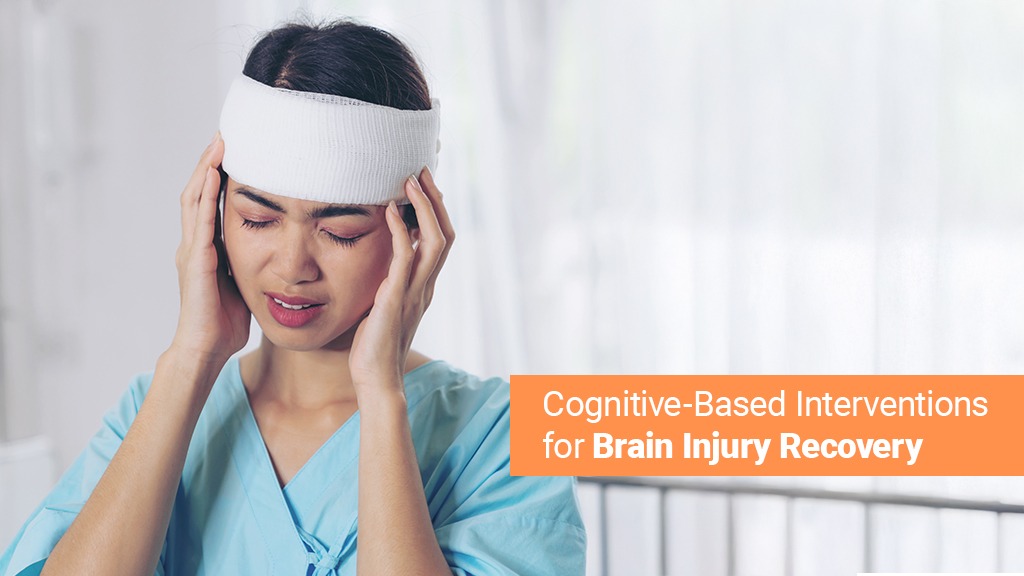
Life may change forever due to a brain injury in a manner not necessarily visible. Whereas the physical injuries can be more readily identified, the cognitive ones, such as the alterations in memory, attention, speed of thinking, behaviour, or emotions, may be much more disturbing and puzzling to both the patients and their families. Many people appear fine, but internally, they struggle and cannot accomplish something that was previously easy to do.
Cognitive-based interventions are important here. They assist people to learn again, cope with changes, and recover the confidence they lost following the brain damage. It is not that recovery takes place immediately, but with the organized rehabilitation of the brain, significant progress can be attained.
Table of Contents
ToggleMaking sense of cognitive problems after brain injury
Depending on the location, brain injury, either due to a stroke or traumatic brain injury (TBI), infection, tumour, or oxygen deprivation can impair one or more cognitive functions.
- The typical cognitive problems are:
- Forgottenness or memory lapse.
- Lack of concentration and attention.
- Retarded thought processing.
- Strain in planning or organising work.
- Inability to solve problems.
- Behavioural, mood, or emotional discontinuity.
Such predicaments have the potential to disrupt work, relationships, independence, and self-esteem. These changes are not apparent, but they are influential, and cognitive-based rehabilitation is aimed at treating them.
What are cognitive-based interventions?
Cognitive-based interventions refer to organized therapeutic approaches, which are meant to either enhance or make up for impaired cognitive functions. They are usually headed by neuropsychologists, occupational therapists, speech-language therapists, or trained rehabilitation workers.
This approach is to not only reestablish the skills that have been lost where applicable, but also to enable patients to adjust and live a life on their own.
Reasons why cognitive rehabilitation is the way to go
The brain is such an amazing organ that it can restructure itself; the process is called neuroplasticity. Cognitive rehabilitation employs this ability through repetitive, meaningful, and purposeful activities of the brain that are conducive to restoration.
Timely and regular cognitive therapy can:
- Enhance functional autonomy.
- Lessen anger and emotional discomfort.
- Increase the involvement in therapy and activities of daily living.
- Support going back to work/school.
- Enhance the general quality of life.
Cognitive-based interventions for healing brain injuries
1-Training in attention and concentration
Deficits in attention are typical following brain injury. Simple tasks are introduced, and then the therapy is progressively advanced to more complicated tasks, e.g.
- Being able to keep attention over time.
- Multitasking.
- Filtering out distractions
2-Memory rehabilitation strategies
Problems with memory may be quite disturbing. Cognitive therapy tries to solve this by:
- Recalling and repeating exercises.
- Using association techniques.
- Using calendars, alarms, and notebooks.
- Training in routine procedures.
3-Executive Function training (EFT)
This training involves building executive functioning skills that play a crucial role in non-verbal communication skills, such as listening, reading, speaking, and thinking.
Planning, decision-making, and problem-solving are included in the category of operational activities. The lack of strength in this area can disrupt the autonomy and security.
Therapists use:
Task sequencing activities.
Problem-solving situations in real life.
Goal-setting exercises.
Time-management strategies.
These are essential skills that can help while going back to work or handling housework.
4-Cognitive-communication therapy
Communication is another area that is usually impaired by brain injuries, yet speech may sound normal. Cognitive-communication therapy assists in:
- Interpreting complicated data.
- Organising thoughts.
- Following conversations.
- Communication skills in the social context.
This enhances social and professional involvement.
5-Techniques of behavioural and emotional regulation
Emotional control, impulsivity, or mood changes are usual outcomes of brain damage. Cognitive-based interventions handle these challenges by:
- Self-monitoring strategies.
- Emotional intelligence training.
- Frustration and stress coping methods.
- Structured routines.
- Emotional stability promotes relationships and general recovery.
6-Computer-based cognitive training
There are technology-aided programs that involve repetitive cognitive tasks that are graded and aimed at memory, attention, and the speed of processing. The tools are used to supplement therapist-guided sessions and to provide directed practice.
7- Aids in practical, real-life functions
For skills that have to be applied to ordinary situations, cognitive rehabilitation is most effective. The simulated tasks by therapists include:
Managing finances.
Planning a meal.
Following a schedule.
Navigating environments.
This connects the therapy and daily living.
The role of family and caregivers
Cognitive recovery requires family involvement. The members are trained to:
- Enforce home-based strategies.
- Encourage orderly habits.
- Not to provide too much help.
- Learn behavioural modification.
Education can assist the family to react with patience and confidence.
Cognitive recovery is a time-consuming process. The first improvement might be minor, such as an enhancement of concentration, a reduction in errors, or a sense of confidence, but these minor benefits accumulate to achieve significant independence.
The most important part of therapy is consistency, repetition, and emotional support.

We are India’s first comprehensive continuum care provider. We provide multidisciplinary out of hospital care to acute and post-acute and chronically ill patients at our critical care facilities and your home.
- Sukino Healthcare
- Sukino Healthcare